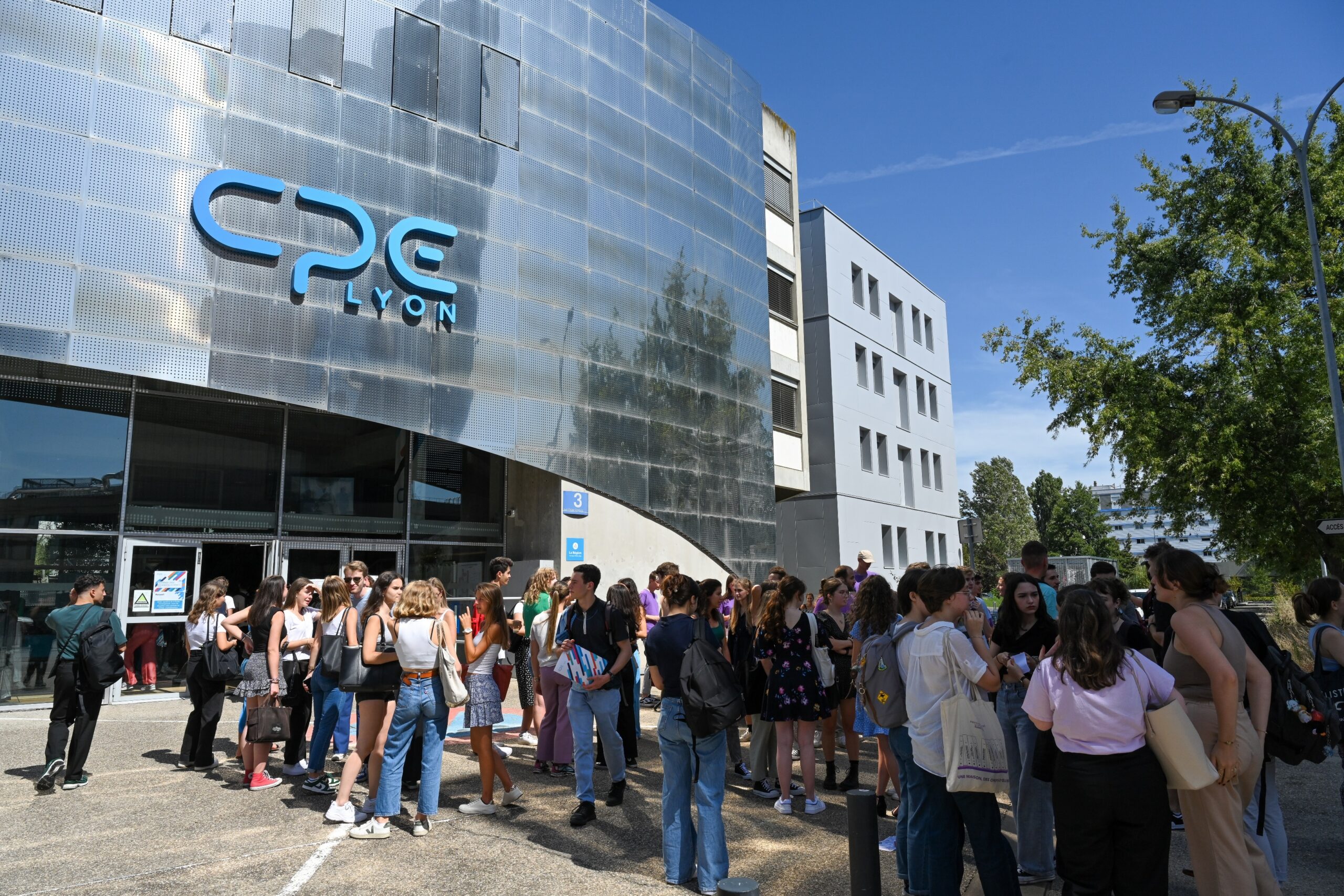
CPE Lyon takes part in GreenWaterTech-2 (Joint transnational call Water4all)
The project Green Remediation Technologies to Remove Synthetic Organofluorine Chemical Compounds from Water (GreenWaterTech-2) is set to start in January 2026 until December 2028. The project is co funded by the European Union and ANR (French national agency for research).
Congratulations are in order for the team behind the project in CPE Lyon laboratories.
Keywords: PFAS, water treatments, photocatalysis, trace analysis, processes and adsorption.
Per- and polyfluoroalkyl substances (PFAS) represent a growing environmental concern due to their persistence and high solubility in water. These properties enable PFAS to spread in the environment, leading to contamination of surface and groundwater, and ultimately reaching drinking water supplies. This project focuses on the development of modular hybrid technologies (MHTs) designed for advanced water ultrafiltration. The core objective is to research and engineer high-performance adsorbents and thermo-photocatalytic treatment units to ensure efficient and reliable MHTs.

The project brings together several academic and industrial partners
Uppsala University (SW), Swedish University of Agricultural Sciences, Umeå University (SW), Institute of Inorganic Chemistry of the Czech Academy of Sciences (CZ), Taltech (Estonia), Brochier Technologies (FR), Treffler Production (FR), CPE Lyon (FR)
In CPE Lyon, the Industrial analytical chemistry laboratory (LCAI) and The laboratory of Catalysis, Polymerisation, Process and Materials (CP2M) are involved in the project GreenWaterTech-2, with Benoît Martelat as the project leader and Claude De Bellefon as the scientific director of the school. Sébastien Burtin (LCAI), Marie-Line Zanota (CP2M) are also associated in the project.
Objectives of the project :
- Identify PFAS hotspots and assess existing treatment methods.
- Develop advanced adsorbents and thermo-photocatalytic treatment units.
- Establish analytical protocols for detecting and quantifying a broad spectrum of PFAS.
- Design pseudo-enzymatic adsorbents on natural carriers and bio-based matrices.
- Develop advanced oxidation processes using super-acid photo-catalyst coated glass fibers and luminous textiles.
- Create reactor systems capable of in-situ regeneration of saturated adsorbents.
The expected outcomes will contribute to sustainable water management and support the development of EU policies on PFAS regulation.